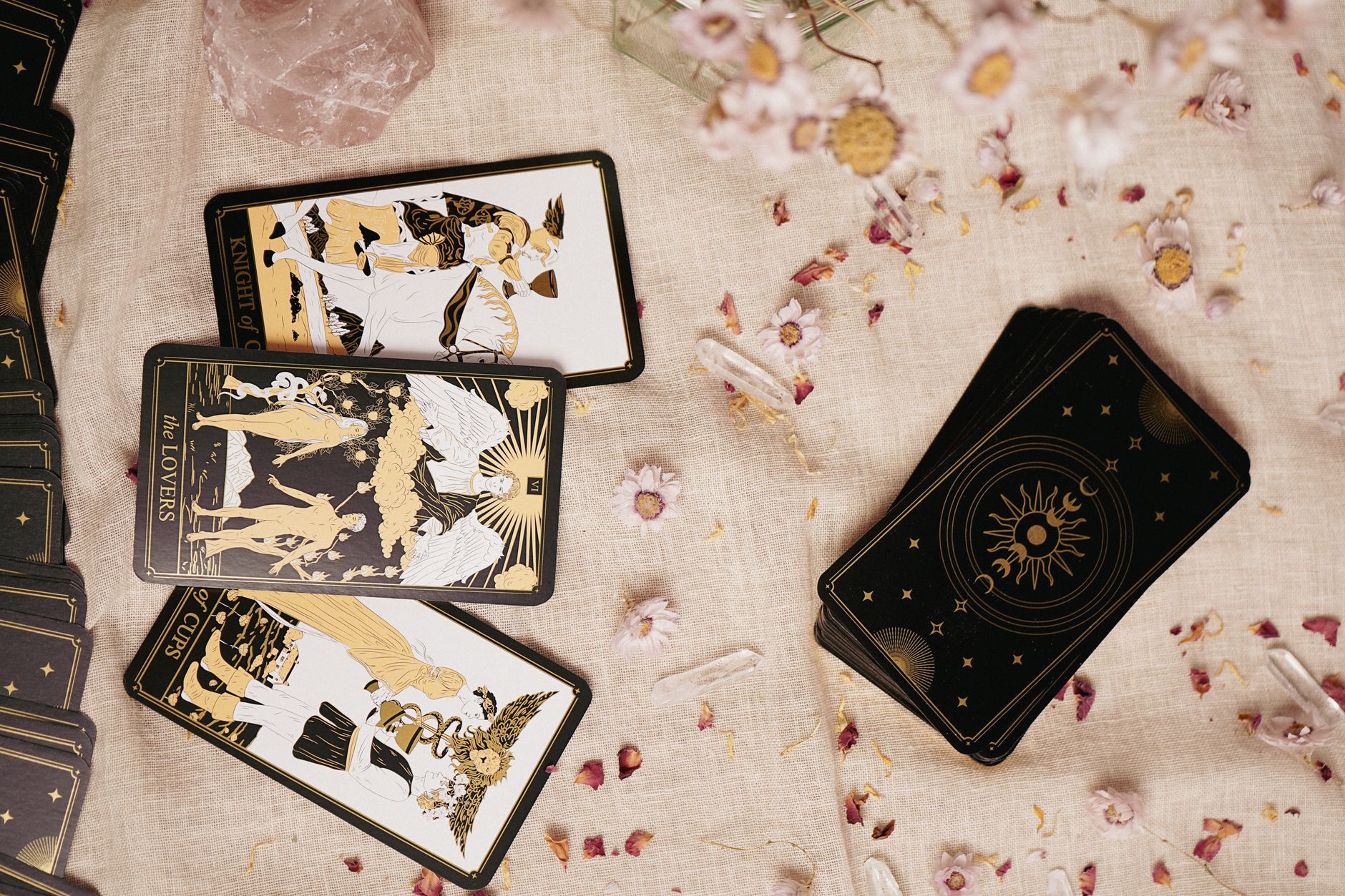
Ever wondered how tarot cards actually work? This post breaks down tarot as a tool for reflection, clarity, and intuition—not prediction.
Have you ever noticed how a simple moment of reflection can completely shift how you see your life?
Before my WWOOF trip, I thought tarot was something I mainly used for myself. I would pull cards when I felt overwhelmed, uncertain, or simply needed reassurance that I was heading in the right direction. But it wasn’t until I found myself surrounded by a community of like-minded people that I truly discovered how meaningful reading tarot for others could be.
I packed my little pocket-sized Everyday Tarot deck without thinking much of it. As conversations unfolded and people became curious, I started offering readings. They would ask a question, I would tune into their energy, shuffle the cards, and together we would explore the messages that appeared. To my surprise, I realized I was becoming much more confident in my ability to interpret the cards. Every reading felt like a conversation rather than a prediction, and each person walked away with something meaningful to reflect on.
That experience changed the way I look at tarot.
I also found myself leaning on tarot in a very personal way during my stay on the farm. Being surrounded by so many different personalities and energies was exciting, but if I’m being honest, it was also emotionally draining at times. Almost every day, I watched tarot readings on TikTok—not because I expected strangers on the internet to tell me my future, but because the messages encouraged me to slow down, reflect, and trust myself.
Those readings reminded me that I was taking the right steps. That the people around me genuinely enjoyed my company. That I was allowed to be there, allowed to take up space, and allowed to hold healthy boundaries. More than anything, they reminded me that I was exactly where I needed to be for my own growth.
By the end of my WWOOF adventure, I felt more confident in myself than I had in a long time. I realized my life doesn’t have to follow anyone else’s timeline or expectations. My path is meant to be an adventure, and as long as I continue taking inspired action, I trust that I’m moving in the right direction.
That personal experience inspired me to learn even more about tarot, how it works, and why so many people find comfort in it.
What’s in This Guide
In this guide, you’ll learn:
- What tarot cards are
- How tarot cards actually work
- The meaning behind tarot symbolism
- Common misconceptions about tarot
- The benefits of using tarot for self-reflection
- How to start reading tarot for yourself
- How tarot can strengthen your intuition
- When tarot can be especially helpful
- Reflection questions to deepen your self-awareness
How Tarot Cards Work: Meaning, Benefits & Life Guidance
Have you ever pulled a tarot card—or even watched someone else do it—and wondered how a piece of beautifully illustrated cardboard could possibly offer guidance?
At first glance, tarot can seem mysterious or even intimidating. Some people assume it predicts the future, while others dismiss it entirely. In reality, tarot is much more grounded than many people think.
Rather than providing fixed answers about what will happen next, tarot offers an opportunity to reflect on your current thoughts, emotions, behaviours, and possibilities. It encourages self-awareness, helping you understand yourself more deeply so you can make decisions with greater clarity.
What Are Tarot Cards?
A traditional tarot deck contains 78 cards, each representing different aspects of the human experience through symbolism, imagery, colours, and archetypes.
The deck is divided into two sections.
Major Arcana
The 22 Major Arcana cards represent significant life lessons, spiritual growth, major turning points, and personal transformation.
These include cards like:
- The Fool
- The Hermit
- The Wheel of Fortune
- Death
- The Star
- The World
When these cards appear, they often point to bigger themes unfolding in your life.
Minor Arcana
The remaining 56 cards focus on everyday experiences.
They explore:
- Relationships
- Career
- Emotions
- Family
- Personal growth
- Challenges
- Decisions
The Minor Arcana is divided into four suits—Cups, Pentacles, Swords, and Wands—each representing different areas of life.
Together, the entire deck creates a symbolic language that helps you better understand both your inner world and your external experiences.
A great beginner deck is the Rider-Waite-Smith Tarot Deck. It’s the most classic tarot system and is known for its clear, symbolic imagery that makes learning tarot much easier.
Each card tells a visual story, helping you build intuition naturally as you practise. It’s a foundational deck many readers still use and recommend for anyone starting their tarot journey.

How Do Tarot Cards Actually Work?
One of the biggest misconceptions is that tarot predicts an unavoidable future.
Personally, that has never been my experience.
Instead, I’ve found tarot works best as a tool for reflection. The cards don’t tell me exactly what will happen—they encourage me to notice what I’m already feeling, where my attention needs to go, and what choices are available to me.
Here are the main ways tarot works.
Symbolic Reflection
Every tarot card represents an archetype.
For example, The Fool symbolizes new beginnings, while The Tower represents sudden change and transformation.
When you pull a card, you’re invited to reflect on how that symbol relates to your own life.
Intuitive Interpretation
No two readings are exactly the same.
The same card can carry different meanings depending on the question, the surrounding cards, and your current circumstances.
This is where intuition becomes so valuable.
As I practiced reading for people during my WWOOF trip, I realized that the cards alone weren’t doing all the work. I also had to listen carefully, pay attention to their energy, and trust the impressions that came to me while interpreting the spread.
Psychological Reflection
Many psychologists compare tarot to looking into a mirror.
Rather than revealing hidden supernatural knowledge, tarot often reveals what is already present beneath the surface of your conscious mind.
Sometimes the cards simply help you acknowledge feelings you’ve been avoiding.
Pattern Recognition
Over time, tarot helps you recognize recurring patterns.
You may notice:
- repeated fears
- recurring relationship dynamics
- limiting beliefs
- habits that no longer serve you
- strengths you’ve been overlooking
Instead of giving answers, tarot often helps you ask better questions.
The Meaning Behind Tarot Cards
Each tarot card contains multiple layers of meaning.
Some well-known examples include:
The Fool
- New beginnings
- Curiosity
- Trust
- Taking a leap of faith
The Lovers
- Relationships
- Personal values
- Choices
- Alignment
The Tower
- Unexpected change
- Breaking old foundations
- Personal transformation
- Growth through discomfort
The Star
- Hope
- Healing
- Renewal
- Spiritual guidance
One thing I’ve learned through my own readings is that no card is truly “good” or “bad.”
Even cards that seem scary often appear because they’re encouraging necessary growth.
The Tower, for example, can feel intimidating. But sometimes old beliefs, unhealthy relationships, or limiting habits need to fall apart before something healthier can be built.
The Gold Tarot Cards for Beginners Tarot Deck Set is a great starter option for anyone new to tarot.
It includes the full 78-card classic structure along with a guidebook, making it easier to understand meanings as you learn. The gold detailing also gives it a beautiful, elevated feel while you practise readings, build confidence, and develop your intuition.
Benefits of Using Tarot Cards
People use tarot for many different reasons.
1. Self-Reflection
Tarot creates intentional space to pause and examine your thoughts, emotions, and behaviours.
2. Emotional Clarity
When emotions feel overwhelming, a single card can help put words to what you’re experiencing.
3. Decision Support
Tarot doesn’t make decisions for you.
Instead, it helps you explore possibilities from different perspectives so you can make choices that align with your values.
4. Building Intuition
The more consistently you work with tarot, the more you begin trusting your own inner voice.
Eventually, you spend less time wondering what everyone else thinks and more time listening to yourself.
5. Mindfulness
Shuffling the cards, taking a deep breath, and sitting quietly for a few minutes becomes a mindfulness practice in itself.
For me, this has been one of tarot’s greatest gifts. Whenever my mind feels busy, pulling a card encourages me to slow down instead of reacting impulsively.
Common Misconceptions About Tarot
Tarot has been misunderstood for generations.
Myth: Tarot predicts a fixed future.
Reality: Your choices influence your future. Tarot highlights possibilities—not certainties.
Myth: You have to be psychic.
Reality: Anyone can learn tarot with practice, curiosity, and an open mind.
Myth: Every reading is mystical.
Reality: Some people approach tarot spiritually, while others use it as a psychological, creative, or mindfulness practice.
There isn’t one “correct” way to use tarot.
How to Use Tarot Cards for Guidance
If you’re new to tarot, keep it simple.
Step 1: Set an intention.
Ask questions such as:
- What do I need to understand today?
- What lesson am I currently learning?
- Where should I focus my energy?
Step 2: Pull one card.
One thoughtful card can be more insightful than an elaborate spread.
Step 3: Notice your first reaction.
Pay attention to what immediately stands out before reaching for a guidebook.
Step 4: Reflect.
Ask yourself:
- Why does this card resonate with me?
- Where is this energy showing up in my life?
- What action feels aligned?
Step 5: Journal your thoughts.
Writing down your interpretations allows you to notice patterns over time and track your personal growth.
Tarot and Intuition: Learning to Trust Yourself
One of the biggest lessons tarot has taught me isn’t about the cards themselves.
It’s about trusting myself.
When I first started learning tarot, I relied heavily on guidebooks. Now I find myself looking at the imagery first, noticing what catches my attention, and allowing my intuition to speak before reading traditional meanings.
Interestingly, watching daily tarot readings online also expanded my understanding. Seeing different readers interpret the same cards showed me there isn’t only one correct answer. Symbolism is rich, layered, and personal.
That’s one reason I enjoy practicing with other people. Every reading teaches me something new—not only about the cards, but about human experiences and the many different ways we navigate life.
A Grounded Perspective on Tarot
It’s important to approach tarot with balance.
For me, tarot is never about giving away my personal power.
The cards don’t make my decisions.
They don’t replace critical thinking, professional advice, or personal responsibility.
Instead, they invite me to pause, reflect, and reconnect with what I already know deep down.
Think of tarot as a conversation with yourself rather than a rulebook for your life.
When Tarot Can Be Especially Helpful
Tarot can be supportive during:
- periods of uncertainty
- career changes
- relationship questions
- emotional overwhelm
- spiritual growth
- major life transitions
- self-discovery
- building confidence
- developing intuition
Sometimes all we need is a new perspective.
Tarot offers exactly that.
Reflection Questions
- When was the last time I truly trusted my own intuition?
- What area of my life feels like it’s asking for deeper reflection?
- Which tarot card or life lesson do I feel most drawn to right now, and why?
- Am I looking for certainty, or am I looking for clarity?
Choose One
A) I usually make decisions based on logic and evidence.
B) I enjoy combining logic with intuition and self-reflection.
Emotional Check-In
Take a quiet moment and ask yourself:
- Do I feel grounded, overwhelmed, or somewhere in between?
- What would change if I trusted myself just 10% more?
- What inspired action can I take today that aligns with the life I truly want?
Tarot isn’t about predicting your life—it’s about understanding it more deeply. With an open mind, a grounded perspective, and a willingness to reflect, the cards can become a meaningful companion on your journey of personal growth.
Final Thoughts
Looking back, I’m grateful I packed that tiny Everyday Tarot deck for my WWOOF trip. I originally thought it would simply be something comforting to have with me, but it became so much more. It helped me connect with incredible people, build confidence in my reading abilities, and strengthen my trust in myself.
More importantly, it reminded me that my life doesn’t have to follow anyone else’s path. My journey is unique, filled with unexpected adventures, meaningful lessons, and opportunities to keep growing. Tarot hasn’t shown me a fixed future—it has helped me become more present, more reflective, and more confident in creating the future I want.
Whether you approach tarot from a spiritual perspective, a psychological one, or simply out of curiosity, I believe its greatest value lies in encouraging honest self-reflection. Sometimes the answers we’re searching for aren’t hidden in the cards at all—they’re already within us. The cards simply help us notice them.

Frequently Asked Questions
1. Do tarot cards really predict the future?
No. Tarot offers guidance and insight by highlighting possibilities, not fixed outcomes.
2. Can beginners learn how to read tarot cards?
Yes! Anyone can learn tarot through practice, study, and trusting their intuition.
3. Do I need psychic abilities to use tarot cards?
No. Tarot relies on symbolism, reflection, and intuition—not psychic abilities.
4. How often should I use tarot cards?
As often as feels right, whether daily or only when you need clarity.
5. What should I ask tarot cards?
Ask open-ended questions that encourage reflection, guidance, and personal growth.
Key Takeaways
- Tarot is a tool for self-reflection, not fixed predictions.
- Each card carries symbolic meaning that encourages deeper insight.
- Anyone can learn tarot—you don’t need psychic abilities.
- Tarot helps strengthen intuition and build self-trust over time.
- Regular practice can bring emotional clarity and support mindful decision-making.
Share Your Thoughts
Tarot is simply a way to slow down and reflect on what’s already going on within you. It doesn’t predict your life—it helps you understand it more clearly.
For me, it’s become a practice that builds confidence, clarity, and self-trust.
I’d love to hear from you in the comments:
- Have you ever tried tarot before?
- What does tarot mean to you?
- What question would you ask a card right now?
Until next time… keep becoming the grounded, glowing you. ✨
Related Reads You Might Enjoy:
- What Are Tarot Cards & How to Use Them
- What Is Spiritual Awakening? Signs, Stages & What to Expect
- How to Connect With Your Intuition and Trust Yourself Fully
Products Mentioned:
- Everyday Tarot Mini Tarot Deck
- Guided Tarot Box Set: Illustrated Book & Rider Waite Smith Tarot Deck
- Gold Tarot Cards for Beginners Tarot Deck Set
- Lined Journal Notebook
Affiliate Disclaimer:
Some of the links in this post are affiliate links, which means I may earn a small commission if you make a purchase at no extra cost to you. I only recommend products and tools that I personally use, love, and believe will support your journey, just as they support mine.
Thank you for supporting my blog — your clicks help me continue sharing these reflections and experiences.

Leave a Reply