
Your grocery choices have more power than you think. Every purchase helps shape demand, influence food production, and determine what ends up on store shelves.
Have you ever stood in the grocery store, picked up a product you’ve bought for years, and noticed that the package seems smaller while the price is somehow higher?
Lately, I’ve been noticing this more and more. Many of us are seeing changes in product portions, packaging, and pricing. At the same time, we’re becoming increasingly aware of the long ingredient lists found in many packaged foods. Ingredients that are difficult to pronounce, heavily processed, or simply unnecessary seem to be appearing everywhere.
As someone who values holistic wellness and intentional living, these changes have made me pause and ask an important question:
What can we actually do about it?
It’s easy to feel powerless when large corporations and food manufacturers seem to control the market. But the truth is that we have more influence than we realize. Every purchase we make sends a message. Every product we choose—or choose not to buy—helps shape what businesses continue producing.
I remember a field trip I took in high school to a grocery store. We were taught how stores are intentionally designed and how understanding that design can help us make healthier choices. One lesson has stayed with me ever since: the foods around the outside walls of the store are often the foods we should be eating more of, while the inner aisles tend to contain the highly processed products.
Of course, there are exceptions. But generally speaking, the perimeter is where you’ll find fresh produce, dairy, meat, eggs, and other whole foods. The centre aisles are often filled with chips, cookies, candy, sugary cereals, and convenience foods. When you start reading ingredient labels, it becomes obvious that many of these products contain additives, preservatives, artificial flavours, colours, and excess sugars that our bodies simply don’t need.
This realization completely changed the way I think about grocery shopping.
What’s in This Guide?
In this article, you’ll learn:
- What “shaping demand” actually means
- How your grocery choices influence the food industry
- Why stores pay close attention to consumer behaviour
- How conscious consumerism is changing the market
- The connection between processed foods and consumer demand
- Practical ways to shop more intentionally
- Why your grocery cart is more powerful than you think
What Does “Shaping Demand” Actually Mean?
In simple terms, demand is what people are buying.
Retailers and suppliers pay close attention to:
- What sells quickly
- What sits on shelves
- What customers repeatedly choose
This data drives decisions like:
- Which products stay or go
- What gets promoted or discounted
- What farmers and manufacturers produce more of
Every purchase you make sends a signal.
The Power of Collective Buying Behaviour
One person choosing a product may not seem significant—but trends are built on repeated patterns.
When enough people:
- Buy plant-based milk → stores stock more varieties
- Choose organic produce → farmers grow more organic crops
- Avoid certain ingredients → brands reformulate products
This is how markets evolve—not overnight, but steadily.
Your individual choice contributes to a much larger ripple effect.

Why Grocery Stores Pay Attention to Your Choices
Modern grocery stores rely heavily on data.
They track:
- Sales volume
- Customer preferences
- Seasonal buying habits
- Emerging trends
In Canada, major grocery chains adjust inventory based on what’s actually moving off shelves—not just what they think people want.
If a product consistently underperforms, it disappears.
If something sells out quickly, it expands.
This is demand in action.
The Hidden Connection Between Processed Foods and Consumer Demand
This is where things become particularly interesting.
Many people complain about processed foods, unhealthy ingredients, and shrinking product sizes. Yet many of those same products continue to dominate shelf space because they continue to sell.
That may sound harsh, but it’s important to understand.
Companies exist to make products that consumers purchase. If millions of people continue buying heavily processed foods, manufacturers have little incentive to change. On the other hand, when enough consumers begin seeking healthier alternatives, businesses adapt surprisingly quickly.
We’ve already seen this happen with:
- Plant-based products
- Gluten-free foods
- Organic produce
- Natural sweeteners
- Cleaner ingredient labels
Consumer demand drives innovation.
The products we see today are often a reflection of what people were asking for years ago.
How Your Choices Influence Food Production
Your grocery habits don’t just affect stores—they reach all the way back to producers.
1. Farmers Adjust What They Grow
If demand increases for certain crops like oats, blueberries, or avocados, farmers may shift production to meet that demand.
2. Manufacturers Reformulate Products
If consumers begin avoiding:
- Artificial ingredients
- Excess sugar
- Dairy
Brands respond by creating alternatives.
3. Supply Chains Evolve
Increased demand for local or sustainable products can lead to more regional sourcing and ethical production practices.
The Rise of Conscious Consumerism
More Canadians are becoming intentional with their purchases.
This includes choosing:
- Locally sourced products
- Sustainable packaging
- Ethical brands
- Plant-based alternatives
- Foods with fewer ingredients
This shift is often called conscious consumerism—where buying decisions reflect personal values, not just price or convenience.
And it’s growing.
As someone with a background in holistic nutrition, I find this encouraging. More people are beginning to ask questions about where their food comes from, what is in it, and how it affects their health.
Awareness is growing, and awareness often leads to better choices.
Price vs. Impact: The Real Tension
Let’s be real—price matters.
Groceries in Canada have become more expensive, and not everyone can prioritize organic, local, or premium options all the time.
But here’s the key insight:
You don’t need to be perfect to make an impact.
Even small shifts—like choosing one local product or trying one alternative—still contribute to demand over time.
It’s not about all-or-nothing.
It’s about awareness.
Many people give up before they start because they think healthy or intentional shopping requires perfection. It doesn’t.
One better choice is still a better choice.
Common Ways You’re Already Influencing Demand
You might not even realize you’re doing this:
- Choosing store brands → increases private label production
- Buying sale items → signals price sensitivity
- Trying new products → encourages innovation
- Sticking to favourites → reinforces consistency in supply
Every habit sends a message.
What Happens When You Change Your Shopping Habits?
Even small changes can lead to noticeable outcomes over time.
Short-Term Changes
- Stores test new products
- Promotions shift
- Shelf space adjusts
Long-Term Changes
- New product categories emerge
- Old products phase out
- Industry trends evolve
For example, the rise in dairy-free products didn’t happen randomly—it followed years of shifting consumer demand.
How to Shop More Intentionally (Without Overthinking It)
You don’t need to analyze every item in your cart. Just bring a bit more awareness into your choices.
1. Ask Yourself One Simple Question
“Do I actually want to support this product?”
That’s it.
No pressure—just awareness.
2. Read Ingredient Labels
The fewer ingredients, the better isn’t always true, but it can be a helpful guideline.
Look for foods that resemble actual food rather than chemistry experiments.
3. Shop the Perimeter First
Remember the lesson I learned on that grocery store field trip?
Start with the outside aisles first.
Fill your cart with produce, proteins, dairy, eggs, and whole foods before heading into the centre aisles.
4. Choose One Value to Focus On
Instead of trying to do everything, pick one:
- Local
- Organic
- Budget-friendly
- Minimal ingredients
5. Stay Curious
Try new brands or alternatives occasionally. This supports innovation and keeps your options open.
6. Balance Practicality with Intention
Some weeks will be about budget.
Others may allow for more conscious choices.
Both are valid.
Try using a weekly meal planner to help you make better decisions.
A Deeper Perspective: Your Cart as a Vote
Every time you shop, you’re casting a quiet vote for the kind of food system you want to support.
More processed or more whole?
More local or more global?
More sustainable or more convenient?
There’s no judgment—just awareness.
Because when you start seeing your choices this way, even small decisions begin to feel more meaningful.
Reflection Questions
- When was the last time I read the ingredient label on a product I buy regularly?
- What values matter most to me when grocery shopping?
- Am I purchasing products out of habit, convenience, or intention?
- Which products in my cart truly support my health and wellbeing?
- What kind of food system do I want to help create through my purchases?
Choose Between A or B
Prompt 1
A) Continue buying products without checking ingredients
B) Read the label before adding an item to my cart
Emotional Check-In
- Do I feel empowered or overwhelmed when thinking about healthier grocery choices?
- What is one realistic change I could make this week?
- Am I striving for perfection—or progress?
- How would it feel to trust myself to make one intentional choice at a time?
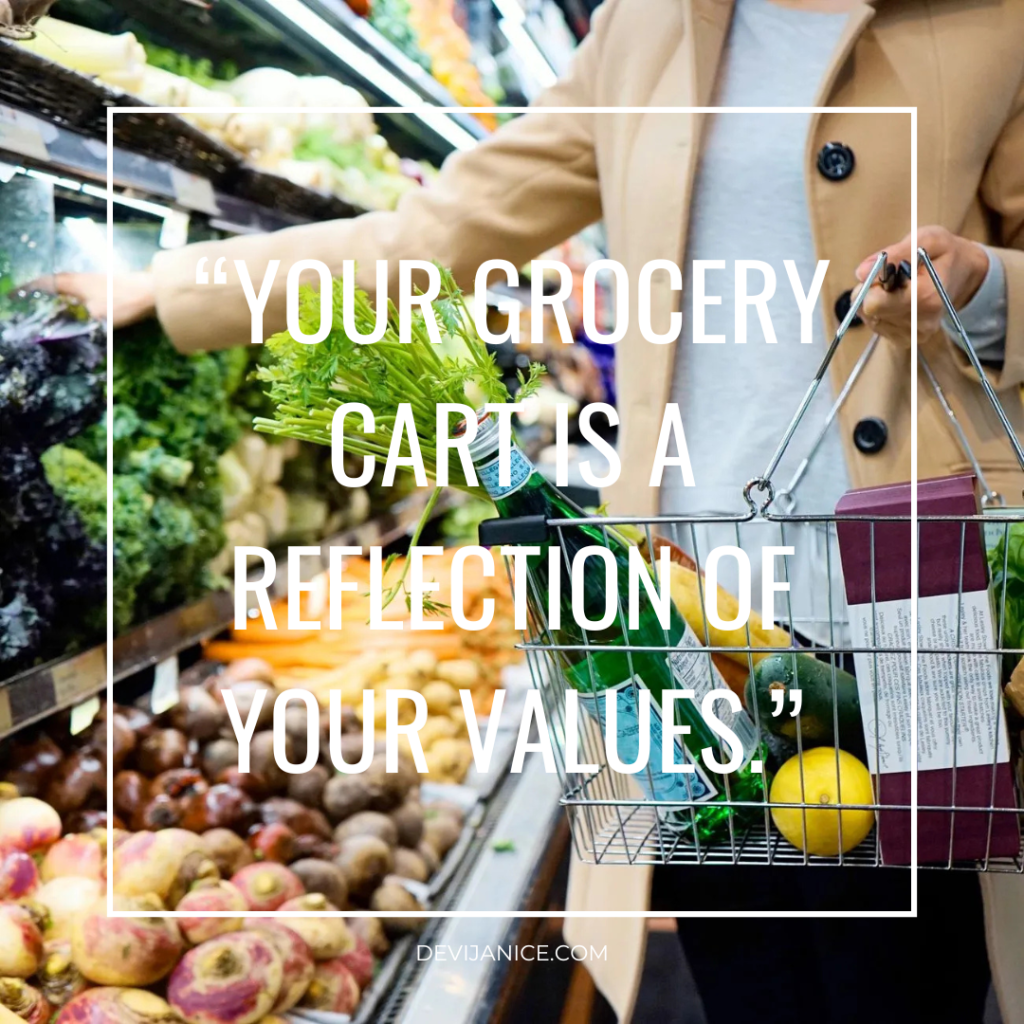
Remember: your grocery cart is more than a collection of products. It’s a reflection of your values, priorities, and the future you’re helping create with every purchase.
Final Thoughts
The older I get, the more I realize that meaningful change rarely happens through grand gestures. It happens through small, repeated actions.
Every grocery trip is an opportunity to align our spending with our values.
Not perfectly.
Not all at once.
Just one choice at a time.
I still buy convenience foods occasionally. I still choose budget-friendly options when needed. But I try to remain aware of what I’m supporting and why.
That’s what intentional living means to me.
Not perfection—awareness.
Because when enough people become aware, industries change.
And maybe that’s how we begin creating a healthier food system: not by waiting for companies to change first, but by making conscious choices that encourage them to.
Frequently Asked Questions
1. How do shopping choices affect demand?
Products that sell well stay on shelves, while low-selling products often disappear.
2. Can one person make a difference?
Yes. Collective consumer choices drive market trends and influence what companies produce.
3. What is conscious consumerism?
Making purchases that align with your values, such as health, sustainability, or supporting local businesses.
4. Why do stores track buying habits?
To determine which products to stock, promote, or remove.
5. How can I shop more intentionally?
Read labels, choose more whole foods, and support products that align with your values.
Key Takeaways
- Every grocery purchase helps shape consumer demand.
- Products that sell well are more likely to stay on store shelves.
- Consumer choices influence retailers, manufacturers, and farmers.
- Conscious consumerism means buying in alignment with your values.
- Small shopping habits can create long-term industry changes.
- Reading ingredient labels can help you make more informed decisions.
- You don’t need to be perfect—small, intentional choices matter.
- Your grocery cart is a powerful way to support the food system you want to see.
Your Role in the Bigger Picture
The more we understand how our grocery choices shape demand, the more empowered we become as consumers. This isn’t about perfection or completely changing how you shop overnight—it’s about awareness. Every time you choose a product, you’re participating in a much larger system that responds directly to what people buy.
Start small. Notice your habits. Read a label here and there. Choose one item that aligns more closely with your values on your next grocery trip. Over time, these small decisions add up and begin to influence the bigger picture.
I’d love to hear your perspective on this.
Comment below: What is one thing you’ve noticed about grocery shopping lately—prices, ingredients, or your own habits? Have you started making any intentional changes yet?
Your experience might help someone else become more aware of their own choices too.
Until next time… keep becoming the grounded, glowing you. ✨
Related Reads You Might Enjoy:
- Why You Need More Leafy Greens in Your Diet: Benefits for Gut Health, Energy & Mental Clarity
- What Is Holistic Nutrition? A Complete Guide to Mind-Body Wellness
- Is Dairy Bad for You? Benefits, Risks & What Happens When You Stop
Products Mentioned:
Affiliate Disclaimer:
Some of the links in this post are affiliate links, which means I may earn a small commission if you make a purchase at no extra cost to you. I only recommend products and tools that I personally use, love, and believe will support your journey, just as they support mine.
Thank you for supporting my blog — your clicks help me continue sharing these reflections and experiences.


Leave a Reply