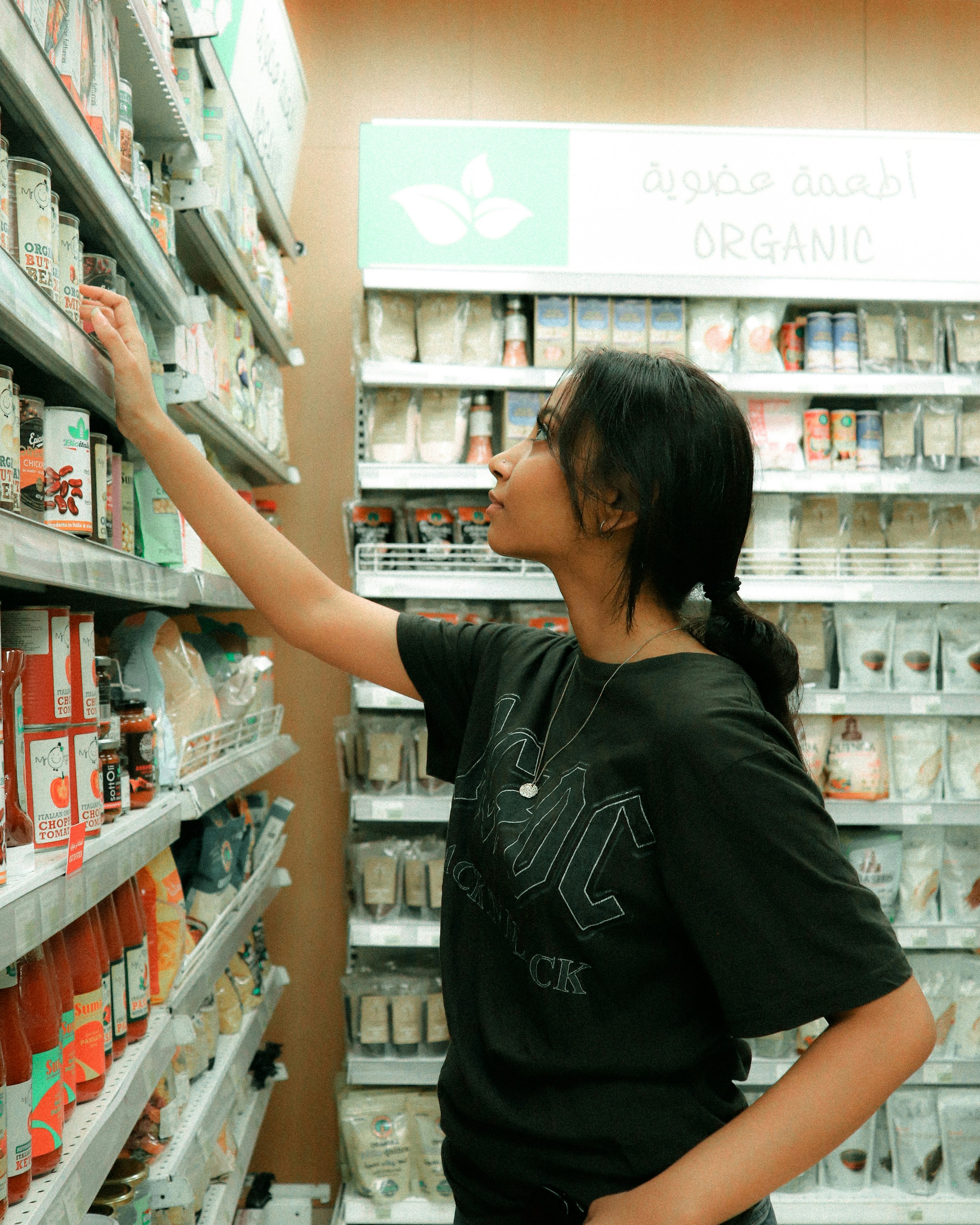
Learn how reading food labels can help you make healthier, more mindful food choices with confidence.
Have you ever stood in the grocery aisle holding two versions of the same product, wondering which one is actually healthier? One package promises it’s “natural,” another says it’s “made with real ingredients,” and both look like great choices. But when you flip them over, the ingredient lists tell a completely different story.
Yesterday, my family and I went to Costco, and I couldn’t help but notice how much grocery stores have changed over the years. There are more organic options than ever before, and more products are being made with simpler, more recognizable ingredients. To me, that’s a sign that consumers are paying attention. Every time we choose products made with whole, real foods, we’re telling companies that’s what we want to see more of.
At the same time, I also noticed that many shelves are still filled with products containing long lists of ingredients I can barely pronounce. And if I’m being completely honest, some of those products ended up in our cart too.
I’ve never claimed to eat perfectly, and I don’t believe healthy living is about perfection. I don’t push my views onto my family, and I certainly don’t think every grocery trip needs to look flawless. Sometimes life is about enjoying that bag of chips during movie night or grabbing an ice cream bar on a hot summer afternoon. My own guilty pleasures are vanilla almond ice cream bars, Hardbite spicy chips, and the occasional can of pop.
The difference is that those treats are the exception, not the rule.
Living on a farm has changed the way I think about food. Much of what we eat comes straight from our garden, grown without chemicals, pesticides, or mystery ingredients. I know exactly where it came from and how it was grown. Then I walk into a grocery store, and suddenly I’m surrounded by brightly coloured packages, clever marketing, and endless temptation.
That’s why I’ve developed one simple habit that guides almost every food choice I make:
I read the ingredient label.
If a product contains a long list of ingredients I don’t recognize, I stop and ask myself a simple question:
Do I really want to put this into my body?
The answer isn’t always no—but I like to pick my poison. If I’m going to indulge, I want it to be intentional rather than automatic.
Reading food labels isn’t about fear. It’s about awareness. It’s one of the easiest ways to become more connected to what you’re eating without following strict diets or obsessing over every calorie.
What’s in This Guide
In this article, you’ll learn:
- Why reading food labels matters
- What food labels actually tell you
- Common marketing tricks that fool shoppers
- How to read ingredient lists without feeling overwhelmed
- What ingredients to pay closer attention to
- How to make healthier choices without aiming for perfection
- Why awareness—not restriction—is the goal
What Are Food Labels, Really?
Food labels are more than just tiny print on the back of a package—they’re one of the few places where companies are required to tell you what’s actually inside the food you’re buying.
In Canada, packaged foods include:
- An ingredient list
- A Nutrition Facts table
- Serving sizes
- Percent Daily Values (%DV)
- Allergen information
While the front of a package is designed to sell the product, the back is designed to inform you.
The more comfortable you become reading labels, the easier it becomes to make choices that genuinely support your health instead of relying on marketing claims.

Why Reading Food Labels Matters for Your Health
1. You Learn What You’re Really Eating
One of the biggest lessons I’ve learned is that appearances can be incredibly misleading.
A product might look wholesome because it’s packaged in earthy colours with words like “natural,” “plant-based,” or “made with whole grains.” But once you read the ingredient list, you may discover preservatives, refined oils, artificial flavours, or several forms of added sugar.
Food companies know packaging influences our decisions.
The ingredient list tells the real story.
Food Rules by Michael Pollan is a simple guide to eating real food, mostly plants, without overthinking nutrition. It’s a reminder that healthy eating can be easy and intentional.
2. You Become More Aware of Hidden Sugars
Sugar isn’t always labelled as “sugar.”
It can appear as:
- Glucose
- Fructose
- Dextrose
- Maltose
- Brown rice syrup
- Corn syrup
- Cane juice
- Molasses
- Honey
- Maple syrup
Some foods people assume are healthy—granola bars, flavoured yogurts, cereals, sauces, and smoothies—can contain surprising amounts of added sugar.
That doesn’t mean you should avoid sugar altogether. It simply means it’s worth knowing where it’s coming from so you can make informed choices.
3. You Can Identify Ingredients That Don’t Work for Your Body
Every body is different.
Some people notice they feel sluggish after eating certain additives. Others experience bloating, headaches, digestive discomfort, or skin flare-ups.
Reading labels helps you identify ingredients such as:
- Artificial sweeteners
- Food dyes
- Gluten
- Dairy
- Highly processed oils
- Certain preservatives
The goal isn’t to fear these ingredients.
The goal is to notice how your own body responds.
Learning to connect what you eat with how you feel is one of the most empowering parts of mindful eating.
4. It Supports Better Digestion
Your digestive system influences much more than your stomach.
It also plays a role in:
- Energy
- Mood
- Immune function
- Nutrient absorption
- Overall wellness
Many highly processed foods are lower in fibre while containing stabilizers, emulsifiers, and additives that don’t contribute much nutritional value.
Choosing foods with shorter ingredient lists and more whole-food ingredients often supports healthier digestion naturally.
5. It Helps You Shop More Mindfully
One of the biggest changes reading labels has made in my life isn’t necessarily what I eat—it’s how I think.
Instead of automatically putting products into my cart, I pause.
I ask myself:
- Is this something I’ll actually feel good after eating?
- Is this nourishing me?
- Am I buying this because of the packaging or because it’s genuinely a good choice?
- Is this worth it?
Sometimes the answer is yes.
Sometimes the answer is no.
Both are okay.
That’s what balance looks like.
How to Read Food Labels Without Feeling Overwhelmed
Reading labels doesn’t need to become complicated.
Here are five simple places to start.
1. Start With the Ingredient List
Ingredients are listed from the highest amount to the lowest.
Generally speaking, shorter ingredient lists with recognizable foods are easier to understand than products containing dozens of additives and preservatives.
If sugar appears within the first few ingredients, it’s worth taking a closer look.
2. Check the Serving Size
Many nutrition labels represent only one serving, even though the package contains two or three.
Understanding serving sizes gives you a more realistic picture of what you’re consuming.
3. Look at Sugar
Rather than obsessing over numbers, compare similar products.
You may be surprised how much sugar varies between two brands of the same food.
4. Pay Attention to Sodium
Packaged soups, frozen meals, sauces, snacks, and even bread can contain large amounts of sodium.
Being aware of this helps you create better balance throughout the day.
5. Keep It Simple
Healthy eating doesn’t require perfection.
It simply requires paying attention more often than you used to.
Small improvements made consistently usually matter far more than dramatic changes that don’t last.
Using a food journal is helpful because it helps you become more aware of what you’re eating, identify patterns in your habits, and stay consistent with your health goals over time.
Common Marketing Tricks to Watch For
Food packaging is designed to catch your attention.
Some common claims include:
- “Natural”
- “Low fat”
- “Organic”
- “Gluten-free”
- “High protein”
- “Made with real fruit”
None of these automatically mean a product is healthy.
For example:
- Organic cookies are still cookies.
- Gluten-free chips are still chips.
- Low-fat products sometimes contain more sugar.
- “Natural flavours” can still be highly processed.
Always flip the package over.
The ingredient list is usually far more informative than the front label.
Healthy Eating Doesn’t Have to Be Perfect
One thing I never want people to take away from my wellness content is the idea that you have to eat perfectly.
You don’t.
I certainly don’t.
Life is meant to be enjoyed.
Some of my favourite memories involve sharing dessert with family, enjoying snacks while watching a movie, or grabbing chips for a road trip.
Food is part of connection.
Food is part of celebration.
Food is part of living.
The difference is that I try not to let those moments become my everyday habits.
Most of the time, I choose foods that make me feel energized, nourished, and well. Then, when I decide to enjoy something that’s less nutritious, I enjoy it without guilt because it’s a conscious choice.
For me, healthy living has never been about being perfect.
It’s about making intentional choices more often than not.
Why This Matters in Everyday Life
Every grocery trip is an opportunity to make small decisions that add up over time.
No single meal will determine your health.
No single snack will ruin it either.
But the habits you repeat every week eventually become your lifestyle.
Reading food labels gives you the information to make those habits intentionally.
You don’t have to change everything overnight.
Start with one product.
Compare two brands.
Read one ingredient list.
Ask one simple question:
Is this something I genuinely want to nourish my body with?
That’s enough.
Yesterday’s Costco trip reminded me that our choices really do matter. Stores are carrying more wholesome products because people are asking for them. At the same time, there will always be tempting treats sitting beside healthier options.
And honestly, that’s okay.
I’ll probably still buy my favourite vanilla almond ice cream bars once in a while. I’ll still enjoy spicy chips with my family and crack open a can of pop on occasion.
But I’ll also continue filling my cart with foods that have simple ingredients, fruits and vegetables from our garden, and products that make me feel my best.
For me, wellness isn’t about avoiding every indulgence.
It’s about creating a lifestyle where nourishing my body is the norm, and treats become something I truly enjoy instead of something I mindlessly consume.
Awareness is what creates lasting change.
Not perfection.
Reflection Questions
- How often do I read ingredient labels before buying packaged food?
- What foods in my pantry could I become more curious about?
- Do I choose foods based on marketing or what’s actually inside them?
- What is one small change I could make during my next grocery trip?
Choose Between A or B
A) I usually buy food based on habit or convenience.
B) I want to become more intentional about what I put into my body.
Emotional Check-In
- Do my current food choices leave me feeling energized or depleted?
- Am I trying to eat perfectly, or am I simply trying to become more aware?
- What would mindful grocery shopping look like for me this week?
You don’t have to overhaul your entire diet to improve your health. Sometimes the smallest habit—like turning over a package and reading the ingredient list—is the first step toward making choices that truly support your well-being.
Final Thoughts
Food labels aren’t meant to overwhelm you—they’re meant to give you clarity in a world full of marketing and mixed messages. Once you start paying attention, you begin to see food differently: not just as something to grab quickly, but as something that directly affects how you feel, think, and function every day.
You don’t need to eat perfectly or avoid every processed food to be healthy. This is about awareness, not restriction. Some days you’ll choose the cleaner option, other days you’ll choose the treat—and both can exist in a balanced life.
What matters most is that you’re making those choices consciously, not automatically. That small shift alone can completely change your relationship with food over time.

Frequently Asked Questions
1. Why is reading food labels important?
It helps you understand what’s in your food and make more informed choices.
2. What should I look at first on a food label?
Start with the ingredient list to see what the product is mostly made of.
3. Does a long ingredient list always mean a food is unhealthy?
No. Focus on the quality and recognizability of the ingredients.
4. Can I still eat processed foods and be healthy?
Yes. Healthy eating is about balance, not perfection.
5. How can I make reading food labels easier?
Check the ingredients, serving size, sugar, and sodium, then compare products.
Key Takeaways
- Read the ingredient list, not just the front of the package.
- Ingredients are listed from highest to lowest quantity.
- Watch for hidden sugars, sodium, and artificial additives.
- Don’t rely on marketing claims like “natural” or “low fat.”
- Choose foods with simple, recognizable ingredients when possible.
- Healthy eating is about awareness, not perfection.
- Small, mindful choices can make a big difference over time.
Join the Conversation
Now I’d love to hear from you! Do you regularly read food labels, or is this something you want to start doing more often?
Share your thoughts, experiences, or favourite label-reading tips in the comments below. Your insights might inspire someone else to make more mindful food choices.
If you found this guide helpful, consider sharing it with a friend or family member who wants to eat healthier—because small, informed choices can lead to lasting change.
Until next time… keep becoming the grounded, glowing you. ✨
Related Reads You Might Enjoy:
- Is Dairy Bad for You? Benefits, Risks & What Happens When You Stop
- What Is Organic? A Complete Guide to Organic Food, Products & Sustainable Living
- Why Protein Is Important: Benefits, Sources, and How It Supports Your Energy
Products Mentioned:
Affiliate Disclaimer:
Some of the links in this post are affiliate links, which means I may earn a small commission if you make a purchase at no extra cost to you. I only recommend products and tools that I personally use, love, and believe will support your journey, just as they support mine.
Thank you for supporting my blog — your clicks help me continue sharing these reflections and experiences.


Leave a Reply